How OVGG Breaks Bread and Barriers
By: Jackie Chen
Food can be many things– a cure for hunger, a source of micronutrients, a lure for house pests, a conversation starter at a dinner table, a dog’s best friend, a chef’s magnum opus, a tree’s gift to the world. At Ocean View Growing Grounds, it is a binder of community. OVGG’s mission to create food-based programs that meet the demands of locals has not only served hundreds of residents since its inception, but continues to serve as a reminder that communities strengthen when their members work in tandem.
However, only when there is authentic and current community demand is this collaboration possible. When an ask exists, the garden listens. Staff at OVGG work closely with this integral community feedback to make sure that demand is met authentically. The way OVGG sees it, they themselves are not there to insert their input or solutions, rather, community members are the ones with seats at the table when it comes to designing their desired projects, offering valuable insight into what is needed or unnecessary within the projects that serve their own communities. The goal is to utilize the existing knowledge that community leaders and community-based organizations (CBOs) already offer. This way, co-creation can go deeper than just asking for input and calling it a day– real social change requires bi-directional learning.
Approximately 25% of San Diego County qualifies as a food desert, meaning a quarter of its residents and their families have limited access to nutritious meals. This includes zip codes like 92173, 92113, 91950, 92105, and 91932. A large portion of this population is also overcrowded with fast-food (what we call a “food swamp”), a recipe for numerous health-related issues down the road. Our county houses an incredibly diverse population, much more than the national average, and a large portion consists of low-income, refugee, and immigrant communities. While the county is working on initiatives to reduce food insecurity and increase healthy food access, the question then becomes “who’s going to support our people on the ground?” As a flagship community garden in the heart of Southeast San Diego, OVGG aims to answer this question.
Combating a food swamp is no easy task. Effective change takes much more than simply growing more fruits and vegetables. Aside from donating our surplus to mutual aid and KOSD, a partner organization that also hosts food distribution days. OVGG works to engage face to face with the community when deciding what projects are worth pursuing. Though OVGG puts food into our volunteer’s and course participant’s pantries, lots of effort goes on behind the scenes to ensure the organization is not just providing band aid solutions but is actively building the capacity of community members to have agency in their own food system. The food that goes from OVGG’s garden beds to kitchen tables or inside people’s cupboards are intentionally tuned to what community members seek; they’ve ranged from Red Hibiscus, Bitter melon, Thai dragon chili to Mexican cuca melon and pink guavas. Often, these are crops grown, maintained, and harvested with the members themselves, providing invaluable education on growing one’s own food, whether it’s for family, community, or commercial business, and allowing people to cooking with familiar ingredients, eat dishes from their country, and connect with home for those whose home is far away. In many ways, OVGG’s solutions are a product of the very communities they work with.
When asked about OVGG’s impact, one volunteer who finds herself returning to the garden shared that having not had a green thumb in the past, she surprised herself with the initiative and agency she gained from her own home growing journey, learning more about what goes into growing different produce and trusting her food, which she realized could look so different from what was sold at the grocery store. After a community cooking class where she and other volunteers were tasked with cooking and sharing a meal using the garden’s resources, she was inspired to take techniques from the event back home. Below are photos taken from the event:
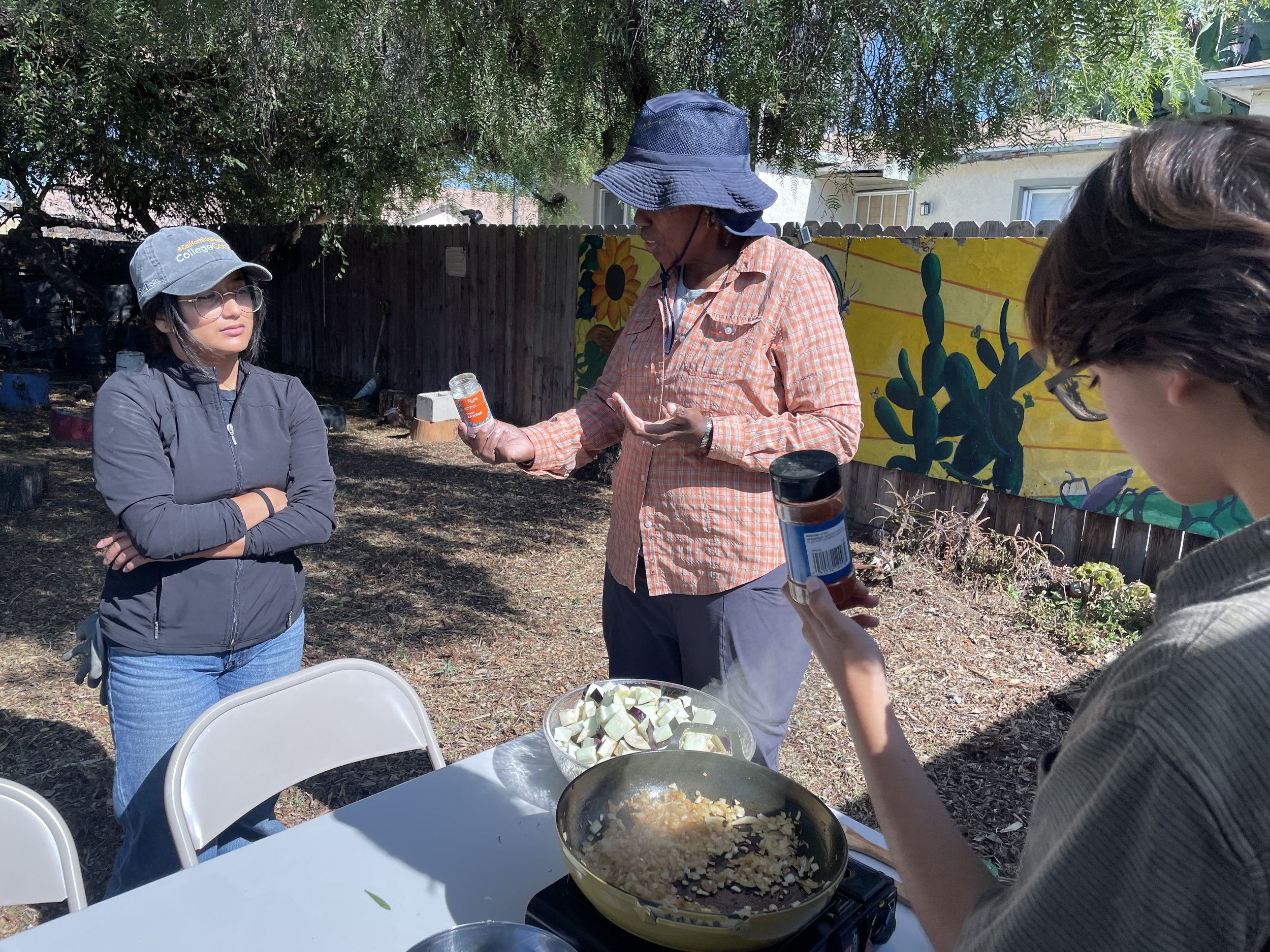
Deliberation over spices.
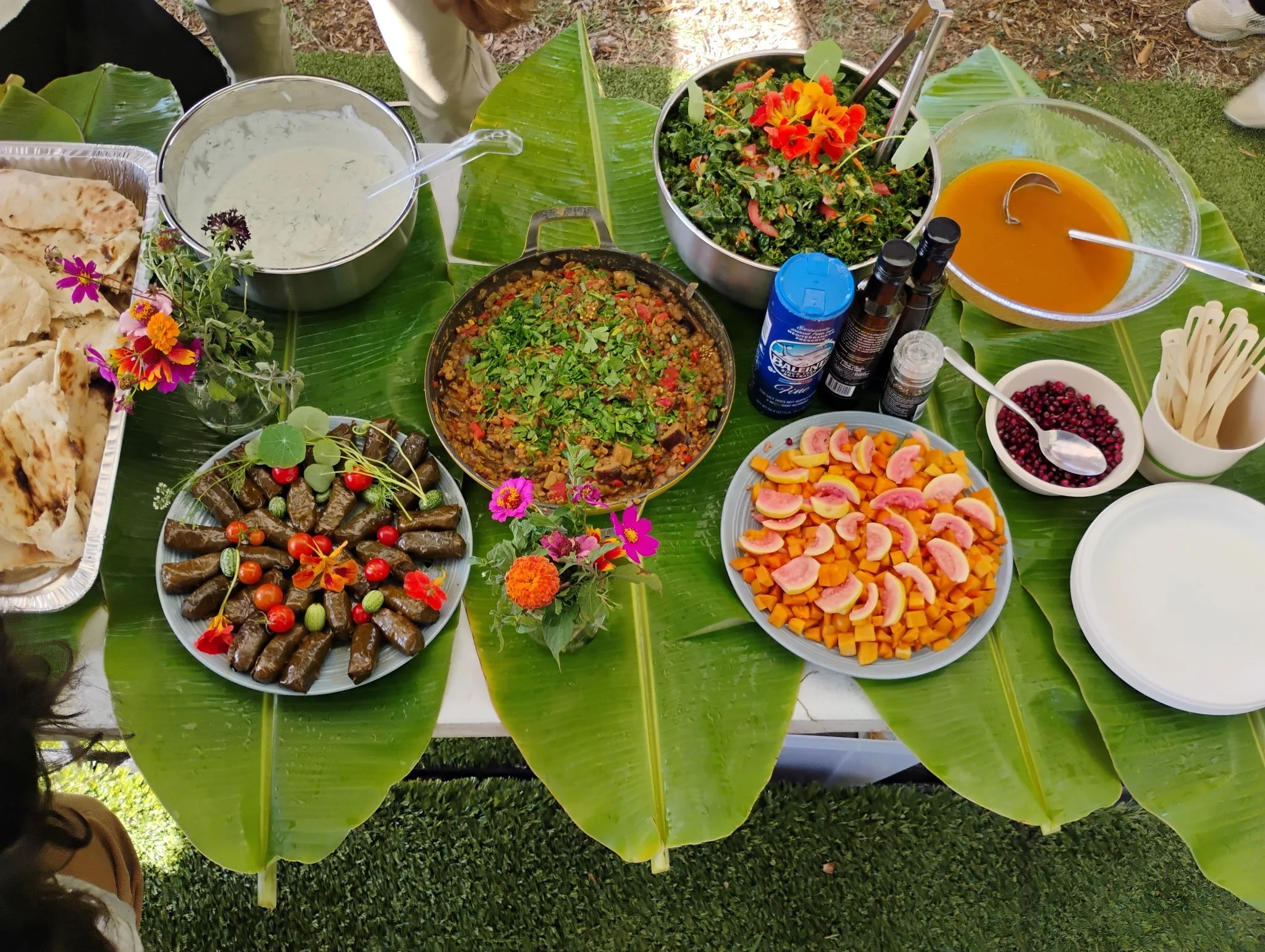
Our wonderful Mediterranean inspired feast.
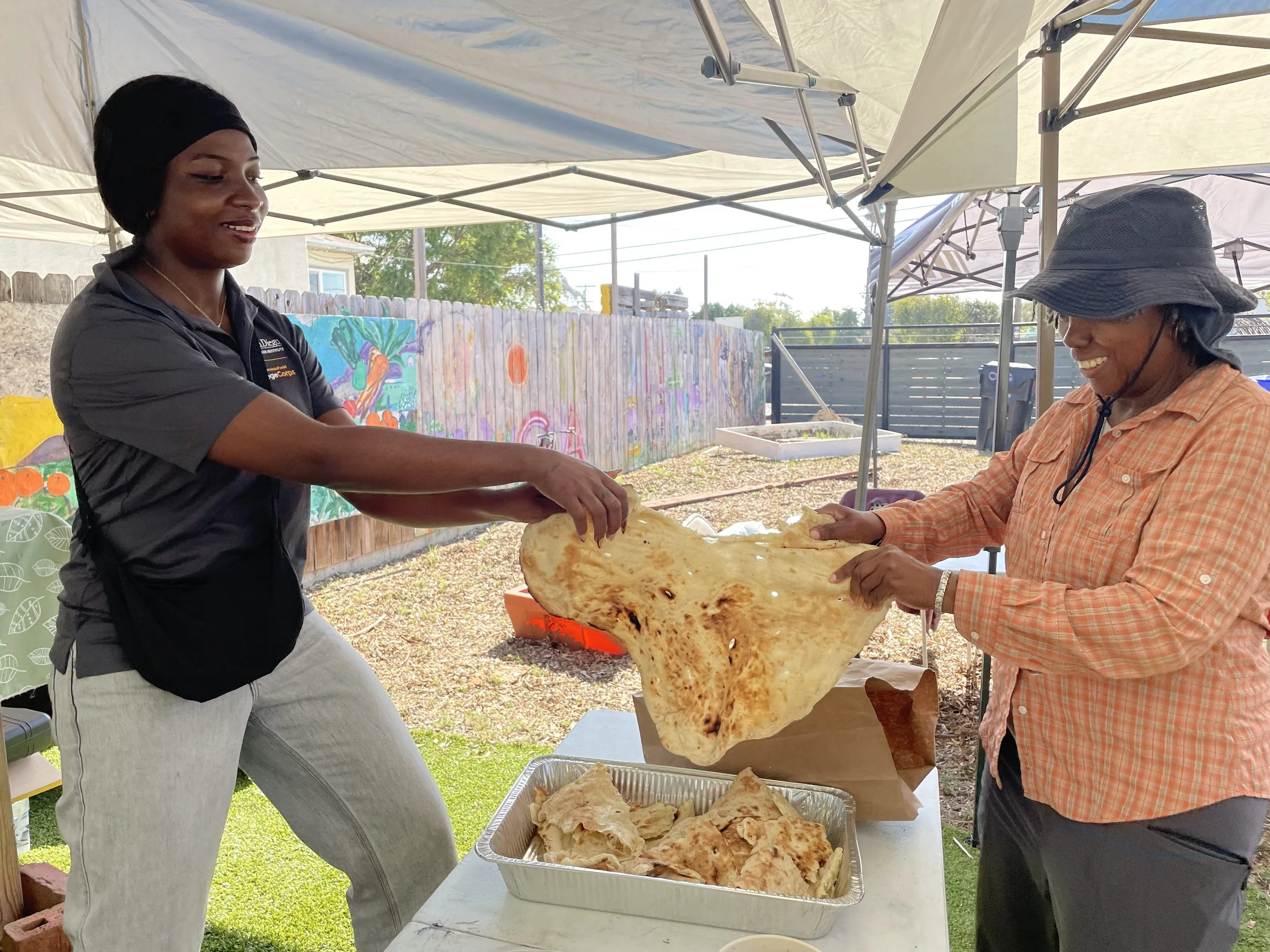
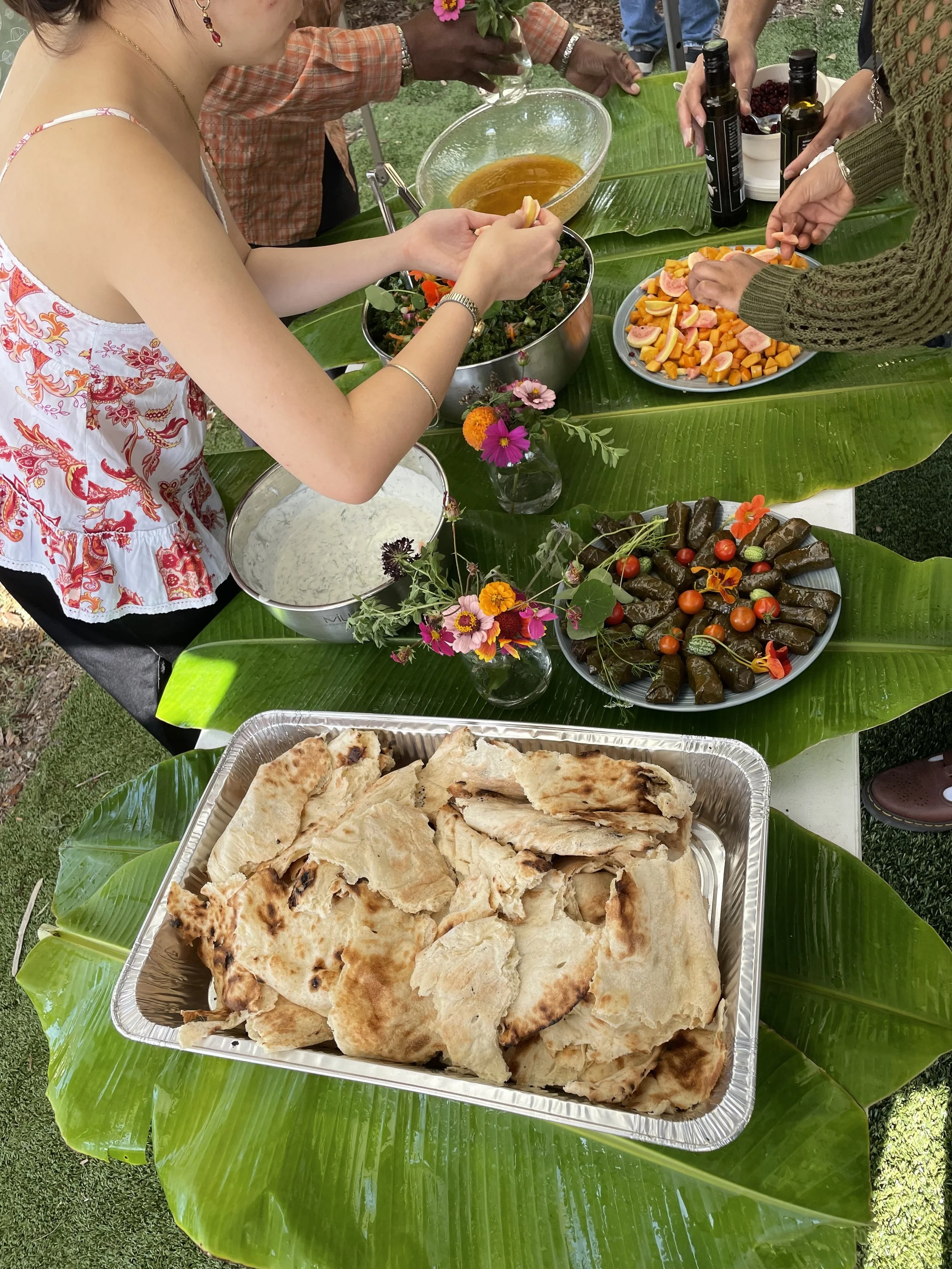
A very literal and symbolic breaking of bread.
The theme of breaking bread, made conveniently obvious thanks to the picture above, is deeply rooted in the social connections developed in any event OVGG hosts. OVGG’s relationship with its volunteers is very much reciprocal; members have used the garden harvest to make banana bread, tomato sauce, guava compote and other homemade dishes alike, brought them back to the garden, and shared with the OVGG community. This open dynamic between place and people, we believe, is what makes a community.
OVGG doesn’t work alone. Its goals also entail collaborating with local community leaders and organizations to spread its efforts relating to community-centered projects and increased access to green spaces and fresh produce even more. Berry Good Food Foundations is one of those orgs and, with OVGG, are providing workshops on how to grow in urban spaces and plots for local communities looking for guidance on growing culturally and climate-relevant crops. This project not only created a permanent gathering and learning space at OVGG for Southeast San Diego CBOs, partners, and community members to connect with resources and environmentally focused organizations, but it is also a space where several community-based organizations, refugee, and immigrant groups who want to start their own small businesses, feed their families, or promote a healthier lifestyle can do so.
As a fellow myself at Ocean View Growing Grounds, I spend most of my time tending to the very plants and buildings that keep the garden alive. But what truly breathes life into the space are the influx of community members and smiles that come through the garden gate. I remember one time, building a square garden bed with a small group of student volunteers from UC San Diego Rotaract Club. We found a few planks of wood roughly the same size and used what we had in the tool shed to measure. What ended up being the final product was eventually filled with soil, topped with hay, and used to plant a lovely, native bush. We were treated at the end of the project with mouthfuls of juicy, OVGG-grown, yellow watermelon and seeds the size of my eyes. To me, this encapsulates just how I view OVGG, a resourceful, hands-on initiative that brings people together, is led by people that care, and uses food for all its purposes: as delicious sustenance, an opportunity to learn, a space for common ground, and a cornerstone of future generational impact.