Seed Sovereignty and the Movement Toward Local Food Resilience
Feb. 8, 2026
Written by Thi Vo (Environmental Justice Learning Hub Manager) and Edited by Jackie Chen (Ocean View Growing Grounds Fellow)
What is Seed Sovereignty? On the surface, seed sovereignty is a farmer’s right to save, use, exchange, and sell their own seeds. Dig a bit deeper and you’ll find that seed sovereignty is crucial in protecting agricultural independence and biodiversity at large. As of 2021, four major companies, including Monsanto and Bayer, controlled approximately 60 percent of the global proprietary seed market. These corporations produce genetically modified seeds that farmers cannot legally save or replant. Such a restriction forces farmers to buy new seeds every year, along with the company’s seed-specific herbicides and pesticides. An issue of layered dependency is created as a result; agricultural giants make farmers sign legally binding contracts that expose them, their soil, and others to harmful synthetic formulas designed exclusively for their seeds. Cutting ties with large capital-driven companies has always been a radical move, but like a colleague once said, “a farmer is only free when they grow their own seeds.”
During the COVID-19 pandemic, many farmers struggled to obtain seeds from the companies they usually relied on as a surge in home gardening created widespread demand. This unforeseen setback has also fueled the growing necessity for seed farmers and farmers alike to start learning how to grow their own seeds. Backyard growers are also learning to grow their own produce, feeding families and neighbors, because of global food disruptions often linked to climate change related extreme weather.
Below are some examples of localized food system disruptions caused by global warming you might have heard of:
The Sriracha hot sauce company faced major decreases in hot pepper yield and production because of droughts that delayed the pepper harvest in Mexico and the US, resulting in shortages and recalls [1].
In 2023 and 2024, heavy rains in Europe spoiled potato crops by halting harvests and causing unharvested potatoes to rot in waterlogged fields [2].
The cost of olive oil has risen over 30% and even 130% in some regions due to prolonged dry summers in the Mediterranean [3].
Peru’s Lake Titicaca and its floating islands, where indigenous communities live, are experiencing unpredictable harvests due to irregular rainfall, shorter rainfalls, and lowering rain levels [4][5][6].
When global disruptions occur, lower-income communities are often at the forefront of its impacts. Grocery stores in these areas may experience price hikes or shortages more quickly than stores in wealthier neighborhoods which serve smaller populations and may have more exclusive supply chains. In response, more backyard growers are seeking guidance on how to grow food in backyards, balconies, or small plots in rental units and build networks within their neighborhoods through community gardens and learning hubs in order to reduce dependency on grocery stores.
At Ocean View Growing Grounds, we have seen this growing interest firsthand. This includes local backyard growers, volunteers, plot growers, small farmers, and immigrant and refugee families - many of whom come from agricultural backgrounds where growing food is a regular part of life. After resettling in urban San Diego, they face the cultural shock of losing access to open land and the ability to harvest food directly. This disruption affects not only their diets and health, but also their mental well-being. Having limited access to culturally significant crops makes it difficult to recreate the nourishing dishes that are part of their everyday cuisine. These dishes are tied to their microbiome and sense of home. The desire to grow food is, and has always been, present in the people.
Saving seeds of cultural significance is integral, but so is how they’re grown. OVGG is breeding varieties that thrive with little to no water, adapting to the local, changing San Diegan climate. Climate change is not just about rising temperatures. It is also about extreme weather. Droughts are hotter and longer, and rainy seasons bring more intense storms. In San Diego, known for its mild weather, these changes are especially noticeable. Thus, a strong local food system is no longer a luxury. It is a necessity. COVID-19, climate change, and profit-driven disruptions have shown us how fragile the industrial food system really is. We’re currently growing our third generation of slow bolt cilantro seeds. We have tested other varieties, but none have performed as well. Below are pictures of the cilantro we harvested from the first generation which did not need much watering and thrived for a long time in high, urban heat.
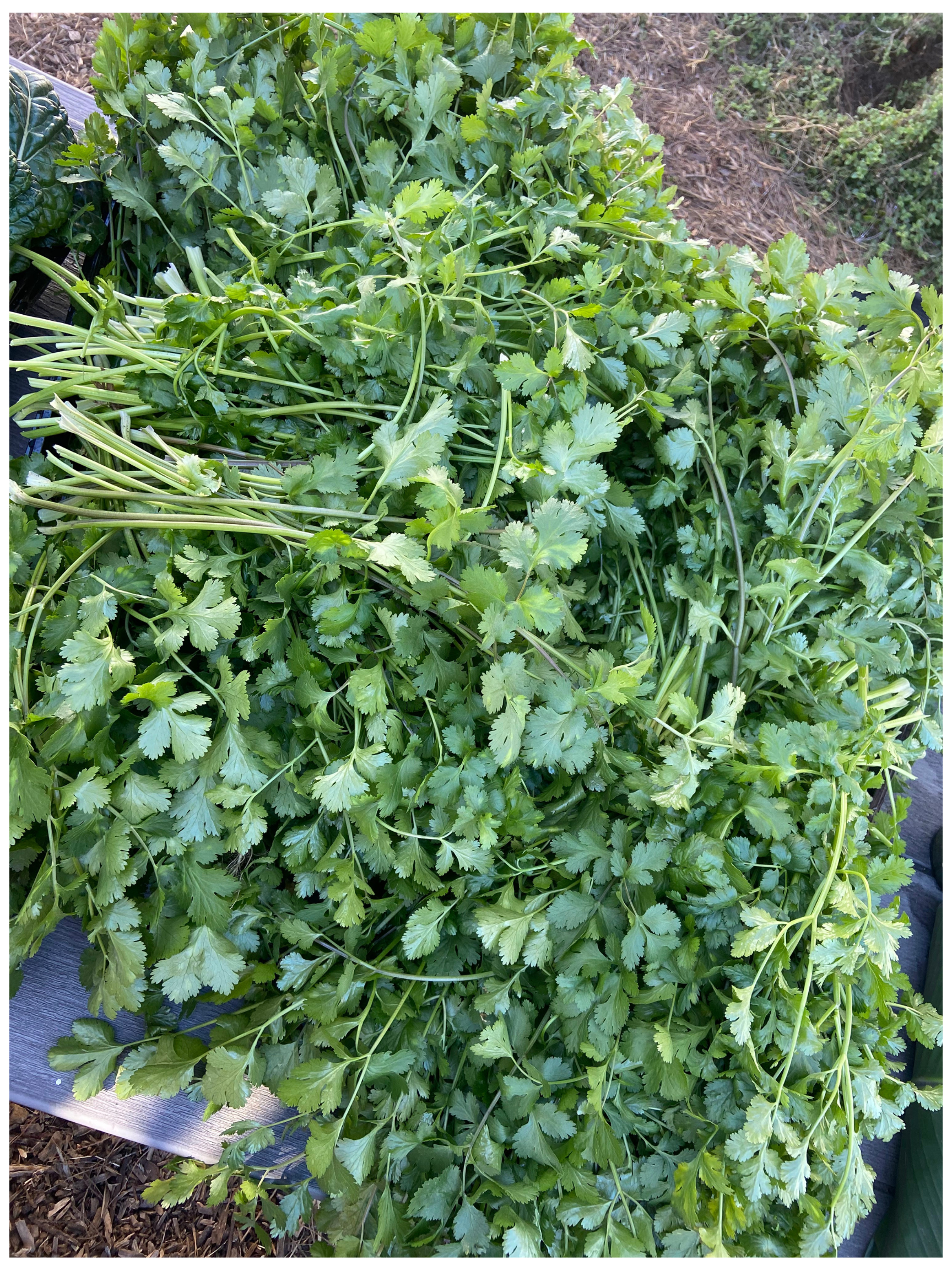
These highly specific and adaptive seeds are key to building resilience- regenerative farming and tailoring crops to thrive in local climates is crucial.
This first generation of cilantro was planted by the Master Gardener’s Association of San Diego during a course where participants were learning about soil amendments. Lily McCann (our former agriculturalist) and I noticed that the cilantro took forever to bolt, which is when the plant shifts from producing leafy greens to sending up a flower stalk to make seeds (can be observed in the video below). Where typical slo-bolt cilantro varieties went to flower around 1-2 feet, these kept growing until around 3 feet. Even though we couldn’t track down the nursery or variety from which the plant came, this experience ended up launching an important initiative for us: saving and selecting locally adapted seeds to build a more climate and food resilient San Diego.
The video above depicts bolted cilantro.
As trendy as homesteading may seem, growing your own seeds and produce, getting involved in your local community garden, or even making ourselves aware of the corporations that monopolize the global food system is a radical act of resilience. There are constantly local community gardens, seed libraries, and neighbors who are growing alongside you. We are at a point where we no longer only focus on mitigating the effects of climate change, but find ways to adapt. Though not everyone has the space or resources to grow food or access a community garden, we all have a role to play in shaping a more resilient food future.
Here at Ocean View Growing Grounds, in partnership with Berry Good Food Foundation for the Seeds for the Future project, we are leading a community-driven initiative to support refugee and immigrant communities in Southeast San Diego in reconnecting with their agricultural roots. Recognizing the link between health, access to green spaces, and fresh produce, the program offers culturally and climate-relevant workshops on urban farming and greening. It provides hands-on guidance, resources, and a permanent gathering space for growers to build relationships with environmental organizations and each other in multiple languages. At its heart, the program cultivates not only fresh produce but also a sense of home and agency in the local food system.
Sources