
Crop Beds
Education Station #9

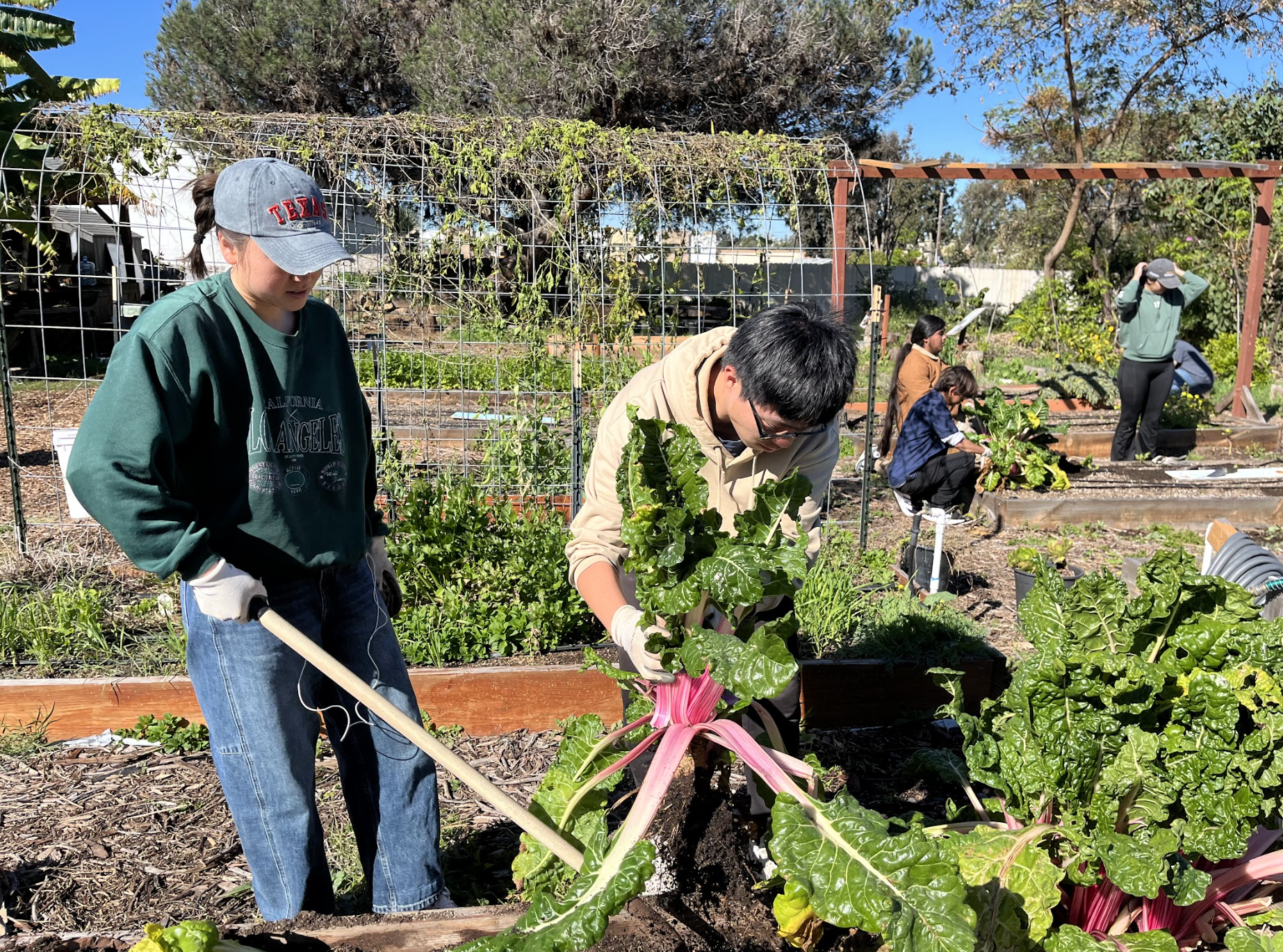
Long before the use of pesticides, herbicides, or synthetic fertilizers, there was crop rotation. A crop rotation is the practice of planting different crops sequentially on the same plot of land. By cycling out different crops, herbs, and tubers we are able to keep the soil lively by not letting certain pests build up or let critical nutrients deplete. In other words, nutrients are conserved from one season to the next, and the life cycles of insect pests, diseases, and weeds are interrupted. Planting the same crops in the same area year after year, like monocrop industrial farms, allows pests to linger and multiply, and depletes the soil nutrients the crop is relying on. This leads to the reliance on chemical pesticides and herbicides. Therefore, the central idea is for the crops to sustain the soil themselves, as opposed to relying on synthetic fertilizers and pesticides. It is how successful farmers nurtured their land over generations, and crop rotation remains vitally important for farmers today wanting to nourish their local environment whilst growing crops.
Crop rotation improves the physical and chemical conditions of soil and results in improved soil fertility. Deep rooted cover crops can draw up nutrients such as potassium and phosphorus from deep in the soil profile, making these nutrients available for subsequent shallow-rooted cash crops. Another example would be nitrogen-fixing legumes. Soybeans and alfalfa in crop rotations fix atmospheric nitrogen into the soil through root nodules. This nitrogen is then available for subsequent crops. Therefore, a Nitrogen depleting crop should be preceded by a nitrogen-fixing crop. Biological complementarities improve nutrient and input efficiency, use of space, and pest regulation, thus enhancing crop yield stability.
BY THI VO
Intercropping
Intercropping is an agricultural practice that involves growing multiple crops in close proximity to one another. We make better use of space by pairing vertically growing crops with horizontally growing crops, produce a higher yield, and maintain healthier soil by planting different species together to prevent disease and pest build up.
The Problem with Monocrops
Growing monocrops, or planting the same crops every season, allows pests to linger and multiply, and depletes the soil nutrients. This practice leads to the reliance on chemical pesticides and herbicides.
The Three Sisters
The most celebrated example of companion planting comes from Indigenous peoples of North America. Corn, beans, and squash — known as the Three Sisters — are planted together because each one supports the others in a different way, creating a self-sustaining system that needs little outside input.
🌽 Corn
Grows tall and provides a natural living trellis for the beans to climb.
🫘 Beans
A nitrogen-fixing legume — pulls nitrogen from the air and deposits it into the soil, feeding the corn and squash.
🎃 Squash
Spreads wide along the ground, shading the soil to lock in moisture, suppress weeds, and deter pests with its prickly leaves.
Companion Planting
Companion planting is the practice of growing certain plants next to each other because they naturally benefit one another. These benefits can include pest control improved growth and better soil health.
Benefits of companion planting:
Natural pest control as strong scented plants deter harmful insects
Reduced need for pesticides supporting organic growing methods
Improved crop health as some plants enhance nutrient availability
Increased biodiversity which encourages beneficial insects and pollinators
Olive Oil Wood Treatment
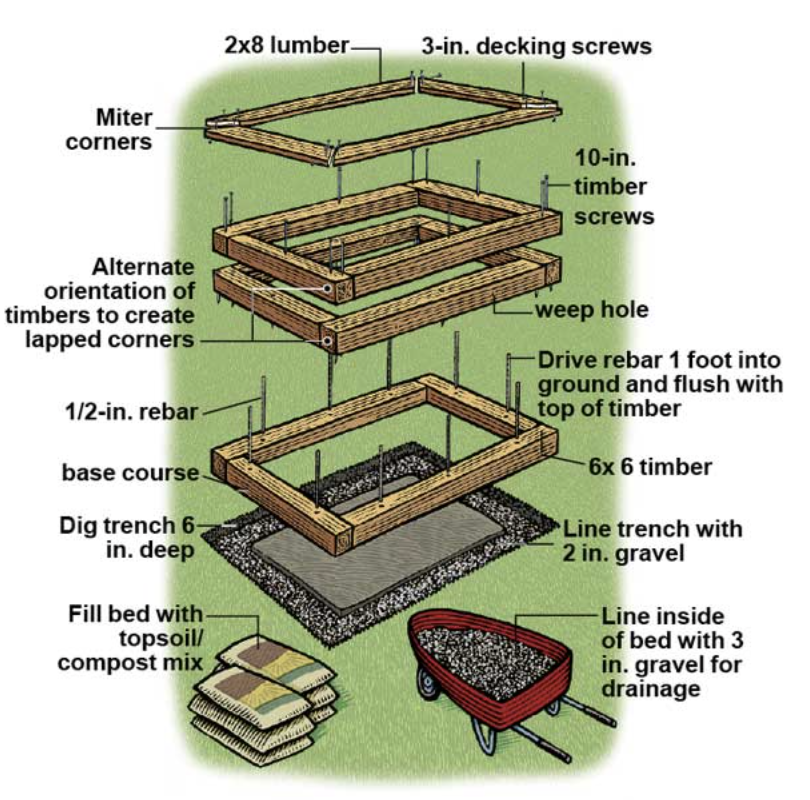
A natural, non-toxic way to protect raised bed timber. Olive oil penetrates wood fibers, slowing moisture absorption and reducing cracking — no synthetic sealants or pressure-treated wood needed.
Avoids chemicals that leach into soil and crops
Food-safe and pollinator-friendly
Prevents splitting and weather damage
Uses common household materials — low cost
chemical-free food-safe low-cost
Edible Landscaping
Food-producing plants blended with ornamental ones — making every corner productive and purposeful.
Supports pollinators and beneficial insects
Improves soil health and biodiversity
Prioritizes food access over aesthetics alone
Vertical Growing Structures
Maximize limited space while improving airflow, sun exposure, and harvest accessibility.
A-frame & teepee trellises for beans, peas, cucumbers
Low-cost string or twine trellising
Wall & fence trellises using existing structures
Hanging planters for herbs or strawberries
Raised Bed Gardening
Clean, controlled soil — essential in urban areas where the ground may contain heavy metals or industrial pollutants.
Safe for growers and consumers
Tailored nutrient-dense soil mixes
Better drainage, less compaction
Higher yields and easier access
Organic Rodent Control
Non-toxic methods that protect crops without harming wildlife or the soil ecosystem.
Supports pollinators and beneficial insects
Improves soil health and biodiversity
Prioritizes food access over aesthetics alone
Crop Beds
Education #9
Long before pesticides and synthetic fertilizers, there was crop rotation — the practice of planting different crops sequentially on the same plot of land. By cycling crops, herbs, and tubers, soil stays lively: critical nutrients are conserved, and the life cycles of pests, diseases, and weeds are interrupted. Planting the same crop year after year depletes soil and lets pests multiply, creating dependence on chemicals. The goal is for crops to sustain the soil themselves.
Crop rotation also improves soil fertility directly. Deep-rooted cover crops draw up nutrients like potassium and phosphorus for subsequent shallow-rooted crops. Nitrogen-fixing legumes such as soybeans and alfalfa replenish atmospheric nitrogen through root nodules, making it available for the next planting. The simple rule: a nitrogen-depleting crop should follow a nitrogen-fixing one. These biological relationships improve nutrient efficiency, space use, pest regulation, and overall yield stability.
— By Thi Vo